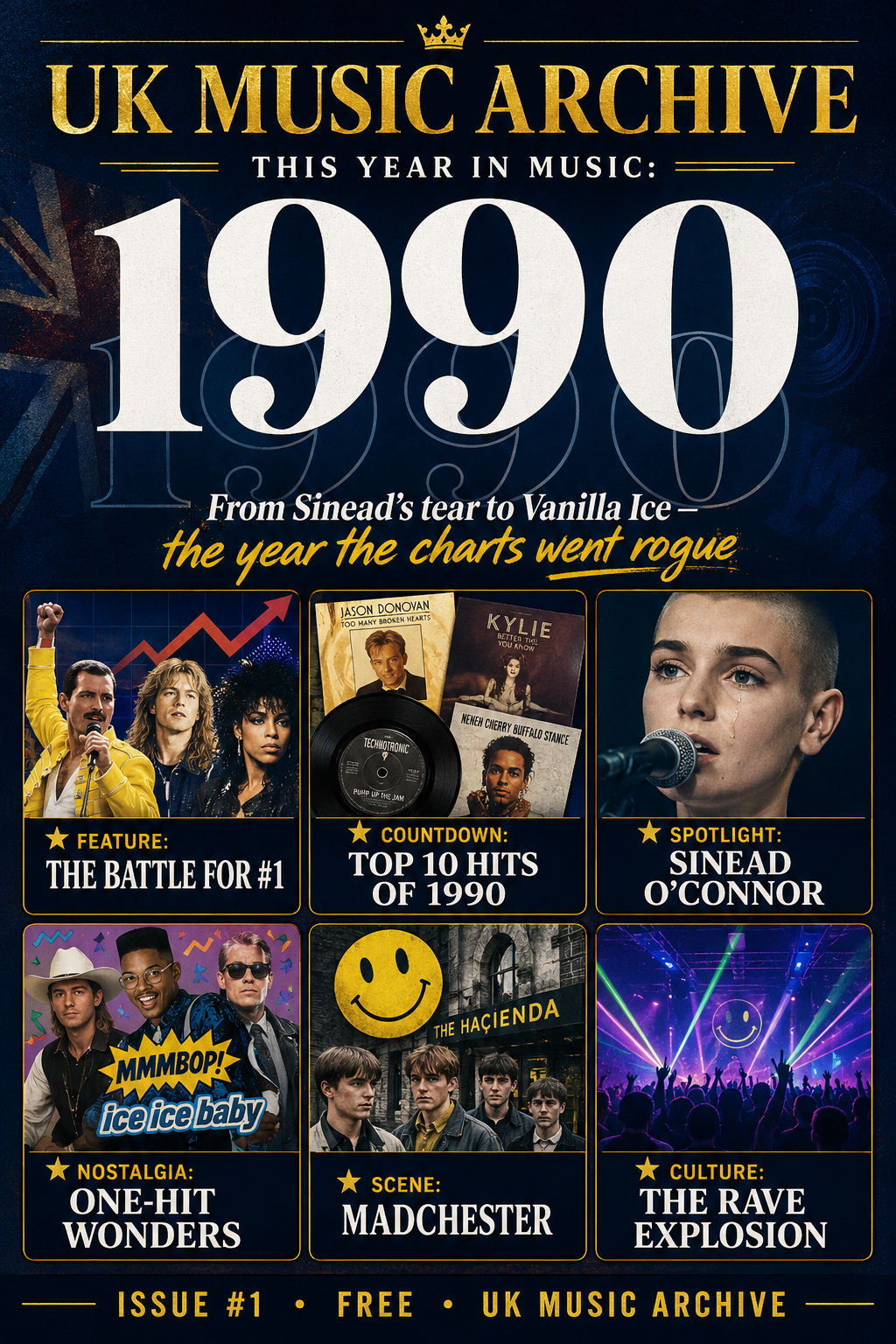
Pop music in 1990 didn't know what it wanted to be. The 80s were over — really over — and nobody had quite figured out what came next. The result was a year of glorious chaos in the charts.
The year opened predictably enough — Band Aid II's "Do They Know It's Christmas?" was still at #1. But by mid-January, things got weird fast. New Kids on the Block kicked off with "Hangin' Tough" — the last gasp of bubblegum before the landscape shifted.
The Dance Revolution
1990 was the year dance music stopped being a subculture and became the mainstream. Adamski's "Killer" wasn't just a #1 — it was a statement. A squelching, hypnotic synth line, a driving beat, and a vocal from a then-unknown Seal that sounded like a man possessed. It didn't sound like pop music. It sounded like the future.
"1990 was the year the charts stopped being predictable and started being exciting again."
The Madchester Wave
Manchester owned 1990. The Stone Roses, Happy Mondays, The Charlatans, Inspiral Carpets. Baggy jeans, bucket hats, and the sound of a generation finding its feet. Spike Island became the British Woodstock — 27,000 people on a disused industrial estate in Widnes.
The Ballad Renaissance
But it wasn't all dance beats. Elton John's "Sacrifice" became the surprise hit of the summer. Maria McKee's "Show Me Heaven" was pure power ballad perfection. And the Righteous Brothers' "Unchained Melody", 25 years old, found new life through a pottery wheel.